
Objectives
Organization Objectives
Long-term Objectives
▪ Poverty alleviation programs through empowerment of small-scale
farmers to promote the availability, stability and access to food.
▪ Rehabilitation of Somali youth and developing positive values and
ensuring that all young Somalis have a healthy future and effective
education.
▪ Developing vocational and skill abilities of Somali youth in various
sectors to prepare professional youth leaders with high qualities and
capacity of leadership.
▪ Illiteracy elimination through sustainable, qualitative and accessible
basic education and vocational training for every gender.
▪ Improving public health through health awareness activities and
promote mother and child care health centers and MCH’s.
▪ Raising community awareness and capacity building regarding to selfreliance,
influencing decision making process, ownership, and
democratization and strengthening civil society of all genders.
▪ Contributing to the overall development of the country
Short-term Objectives
▪ Support children from marginalized group’s
right to basic education and vocationaltraining.
▪ Establishing long live training and supporting vocational skills.
▪ Empowering youth and women through capacity
building, skill training and financialsupport for
small business.
▪ Increase women participation in the society.
▪ Support peace building and reconciliation
activities through education (drama, sports,songs
and poetry)
Project Thematic Areas
Edcuation Programs: These prorams include the support of both the infrastructure and material in remote areas.
Agriculture and Food Security: The organization support small holder farmers with farn inputs and equipment , irriggation and post harvest servces that includes good storage methods that
minimize post harvet loses.
Primary Health Care: Under this program , the organization support the provision of basic health
services that includes organization of village medical camps, immunizations , provision of
medicine for basic illiness, supporting of community health clinics and service providers.
Women and Youth Empowerment: This project supports small women and youth enterprise
through financaial supports to start small business and support existing small business; and
support women skills develpemnt through supporting TVET and other trainings.
Water and Sanitation: The organization through its WASH programs supports the provision of
water by digs community boreholes and construct community latrines to minimze the cases of
open defication.
Climate Change Adaptation and Environmental Protection: Help communities to adapt to
climate change through sensitization on the causes and effects of climate change; mitigation
measures and reduction of drought; support farmers with climate smart agriculture and provision
of drought resistant seedlings.
Community and institutional capacity building: The organization through its various training and capacity building programs that support CBOs, Women and Youth organization on good institutional management and governance.
Human rights and Gender Empowerment: The organization through its programs supports activities that support gender rights, the rights of women and children among other. The organization also promotes, the advancement of gender equality is critical to all areas of a healthy
society, from reducing poverty to promoting the health, education, protection and the well-being of girls and boys.
Protection and Psychosocial Support (GBV): Through this program, the organization facilitate change by addressing the underlying causes and drivers of violence against women and girls at a population level; develop men-focused anti-gender-based violence campaigns and support of
GBV victims through provision of basic health care and psycho-social support.
Nutrition Program: The Organization provides an integrated nutrition program such as Community Mobilization including active screening and referral. Outpatient Therapeutic Programs (OTP) and Targeted Supplementary Feeding Programs (TSFP) offer treatment and preventative measures against malnutrition within the community setting. Meanwhile, Stabilization Centers provide critical care for severe cases. These efforts are essential for monitoring and enhancing the nutritional well-being of at-risk groups.

Organization Coverage Concentrated areas
South West State: Lowershabelle Region (Afgoye,Wanlaweyn,Marka and Barawe Districts) and Bay Region(Baidoa and Bardale District).
Hirshabelle state: Adan yabal District, Balcad district, Cadale District and Jowhar District
Juba land State: Kismayo Town; Gedo Region, Luuq, Dollow, Garbaharey, and Baardheere.
Banadir Region: Districts of Wadajir District,
Dharkenley ,Daynile ,Garasbaley ,Waberi , Hamar
Weyne ,Hamar jab-Jab, Hodan ,Yaqshid
,Shibis,Bondheere, Shangani ,Abdiaziz ,Heliwaa and Karan.
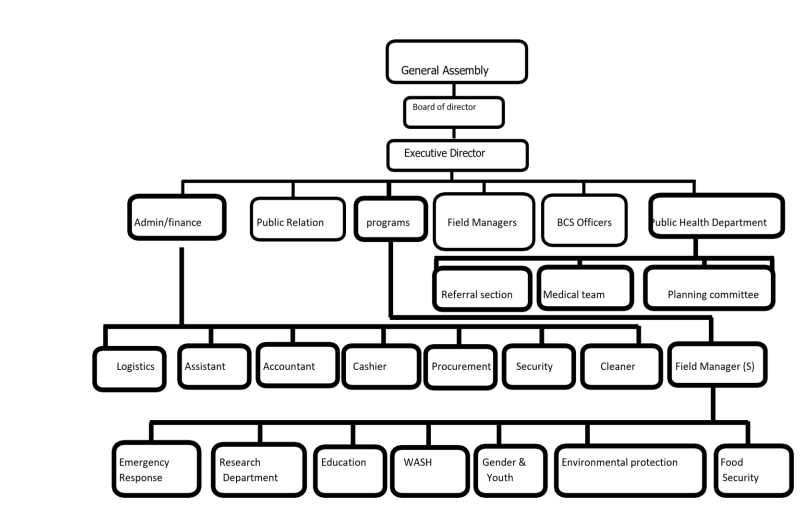
Organization Structure
-
February 2025
Organization Resources:
The organization has invested in equipment and modern technologically based communication to ensure effective communication and ensure that there is effective administration and daily
-
February 2025
Organization Structure:
The organization and operational structure at KYDO help in the implementation of the organization projects from the administration to project field officers at community level.
-
February 2025
Organization Knowledge and skills:
The organization maintains a very skilled and qualified staff in Project Management, Monitoring and Evaluation, Finance, Project Management, Gender, Data Management among others.
-
February 2025
Organization Culture and Climate:
The organization has adapted a good culture that encourages teamwork. The organization also upholds right values, beliefs, attitudes and systems.
-
February 2025
Organization Culture and Climate:
In terms of Intraorganizational and interorganizational relationships and connections, the organization has teamed up and partnered with UNICEF, NRC, UNDP, UNHCR, DRC, ACTED, ILO, Care International, AFRICAN EDUCATION TRUST (AET)
sphere standards
Equality: KANAVA provides humanitarian assistance to all the targeted needy beneficiaries irrespective of their race, nationality, gender, status, education level, political and ideological view.
Caring/Commitment: We assist others, striving for excellence in all that we do,showing kindness to others with whom we work with, recognizing the health in humor, and recognizing and accepting limitations.
Accountability: In our activities we uphold utmost accountability to both beneficiaries and our programs funding agencies. Additionally, our dealings with donors and beneficiariesreflect our attitudeof openness and transparency.
Respect: KANAVA Promotes open communication and sharing of information, respecting the culture of our community beneficiaries and partners’ customs. In addition to listening others point of views that may be different, we also acknowledge their uniqueness and qualities of individual beneficiaries, doners and other stakeholders.
Co-operation: We believe in collective approach to humanitarian assistance and therefore seek to work together with all the like-minded persons and organization in meeting our objective.
Trust: We ensure that our humanitarian assistance activities are not only equitable but are also not driven by personal or political interest. We also ensure that we respect the rights of beneficiaries, especially women and children, and that our staff are not involved in any GBV or manipulation of targeted beneficiaries to exchange sexual favors for humanitarian assistance.
Holistic Manner: We provide a wholistic approach to humanitarian assistance by providing health services, education and psycho-social support to the humanitarian challenges bedeviling.
Additional Competencies
The organization has expertise in designing and facilitating assessments to ensure it is localized and respects the social and cultural setting. 1) Educational assessments 2) Rehabilitation Assessments of Buildings. 3) Assessments of new lands. 4) Infrastructure assessments 5) WASH assessments 6) Humanitarian Needs assessments (Nutrition/Health and Food) Peace and conflict situational assessments
KANANA YOUTH DEVELOPMENT ORGANIZATION
KYDO has excelled in the following areas and sufficient potential, skills and experience to undertake any skills mentioned above. It has also developed personnel as well as other resources for their successes. These areas are: FSL, Protection, WASH, Child frame recovery, counseling and resettlement, vocational training for disadvantaged children and youth, community mobilization and training and provisional of sustainable credit to needy families to sustain the resettled, reintegrated children and youth after training and rehabilitation
Management and Financial and Systems Control
Financial Reporting: The organization does not only have a financial control system but also conducts Systematic and period financial reporting as agreed by different donors. Internal controls: The organization also has an effective control system where only after finalizing these, Purchase order is written under the authorization of the director from there the procurement office startthe procurement process. Audits: External audit is always sent by the donor or the board to ensure things went straight. Logistics: The organization has warehouses where food and non-food items are stored. Inaddition, the organization has trained logisticians and store keepers.
Organization Structure
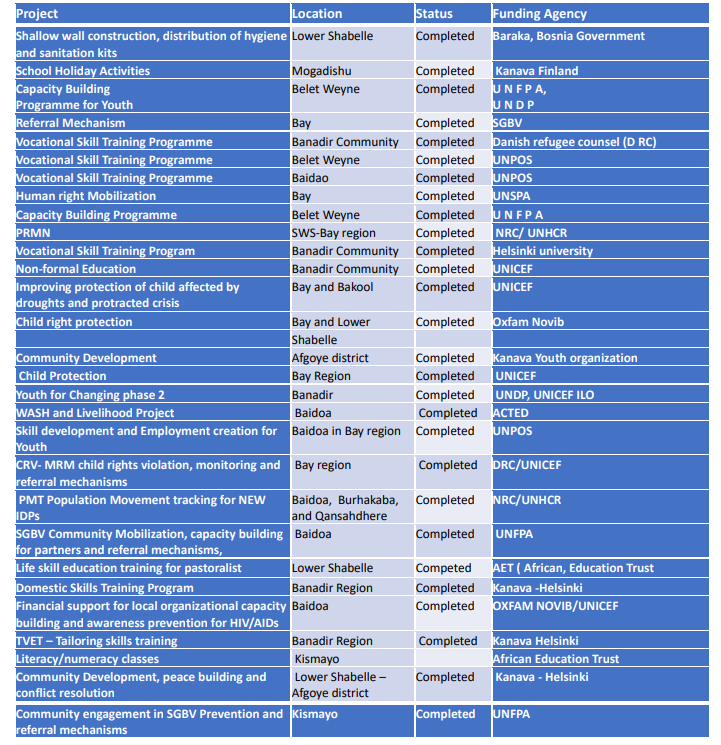
Completed Projects


© Copyright 2023 by kanavasom